AI Integration · Emerging Technology
Physical AI and Humanoid Robots: The Biggest Story from CES 2026
NVIDIA's Cosmos, LG's household robot, and the rise of Physical AI dominated CES 2026. Here's what developers need to know about robots entering our homes and workplaces.

Anurag Verma
7 min read
Sponsored
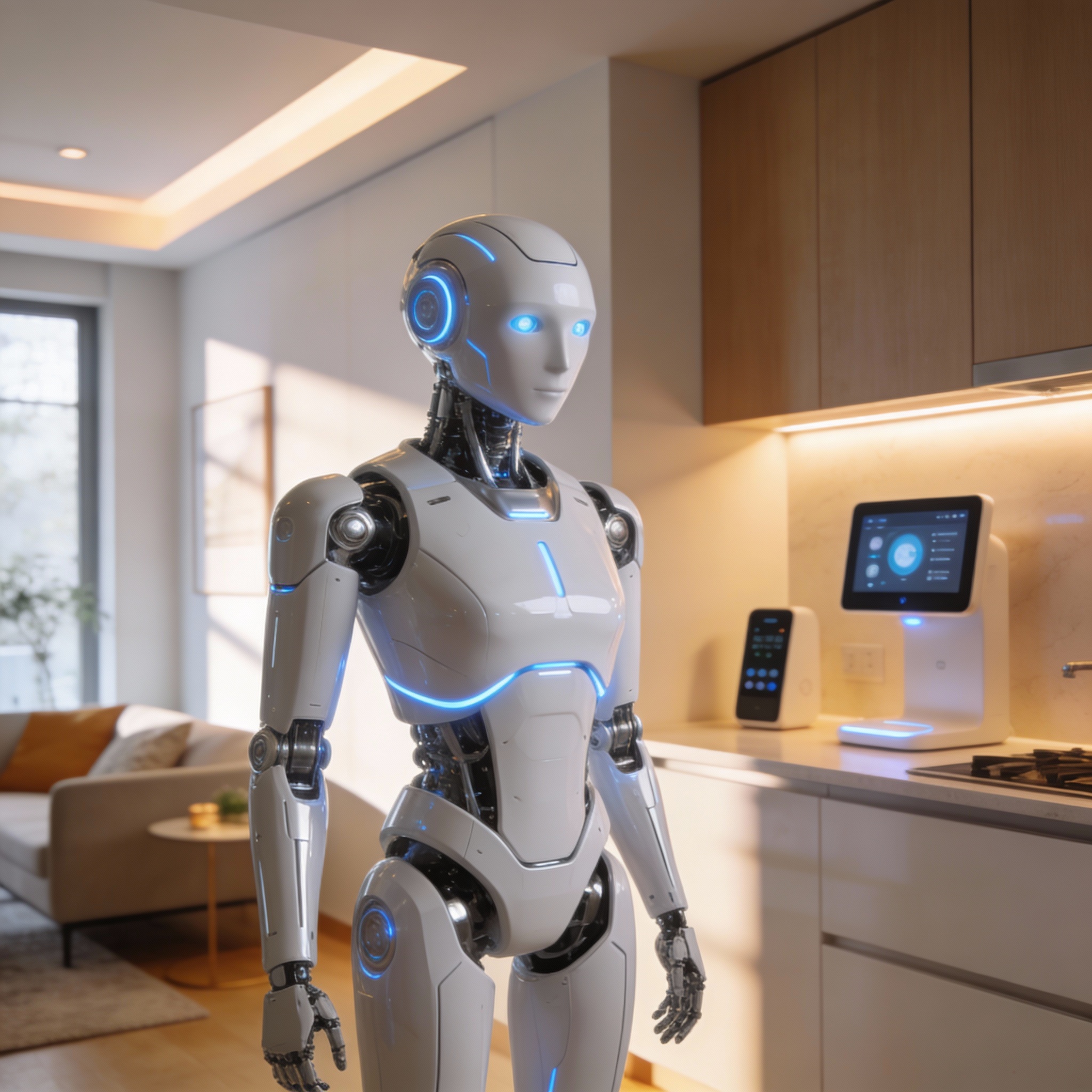
If CES 2025 was defined by “agentic AI,” CES 2026 belongs to Physical AI. This year’s show floor was dominated by humanoid robots, autonomous systems, and NVIDIA’s game-changing Cosmos platform. The message is clear: AI is leaving the cloud and entering the physical world.
What is Physical AI?
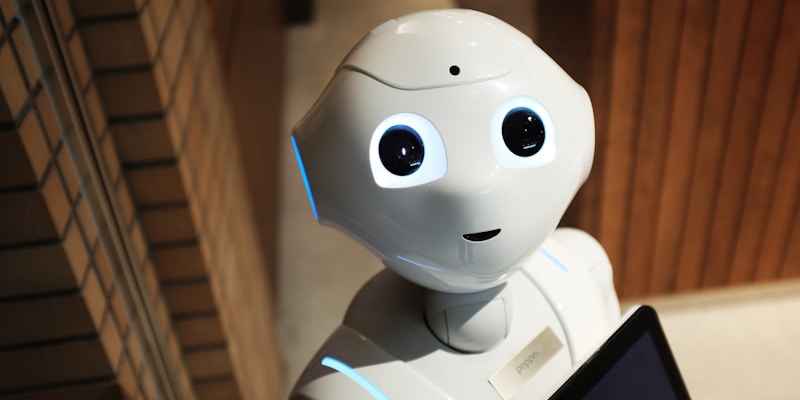
Physical AI is NVIDIA’s term for AI models trained in virtual environments using synthetic data, then deployed as physical machines that can interact with the real world. It’s the bridge between software intelligence and hardware reality.
“Physical AI will be the next giant wave of AI.” — Jensen Huang, NVIDIA CEO
The key distinction from traditional robotics:
| Traditional Robotics | Physical AI |
|---|---|
| Rule-based programming | Learning-based behavior |
| Pre-defined movements | Adaptive responses |
| Limited to specific tasks | Generalizable skills |
| Requires explicit coding | Learns from demonstration |
| Static behavior | Continuous improvement |
NVIDIA Cosmos: The Foundation
At CES 2026, Jensen Huang unveiled Cosmos - a foundation model specifically designed for physical AI. Think of it as GPT for robots.
How Cosmos Works
Cosmos Architecture
├── World Model
│   ├── Physics understanding
│   ├── Object permanence
│   ├── Spatial reasoning
│   └── Cause-effect relationships
│
├── Training Pipeline
│   ├── Omniverse simulation (synthetic data)
│   ├── Real-world video (internet scale)
│   ├── Robotics demonstrations
│   └── Human motion capture
│
└── Deployment
    ├── Edge inference (Jetson)
    ├── Cloud offload (complex reasoning)
    └── Continuous learning
World Models Explained
The key innovation is world models - AI systems that understand how things move and interact in 3D space. Unlike language models that predict text, world models predict physical outcomes:
# Traditional AI
prompt = "What happens when you drop a ball?"
response = "It falls to the ground."  # Text prediction

# World Model AI
state = WorldState(ball_position=[0, 2, 0], ball_velocity=[0, 0, 0])
future_states = cosmos.predict(state, timesteps=60)
# Returns: Ball trajectory, bounce physics, final position
# Robot can then plan to catch or avoid the ball
The Robots of CES 2026
LG’s Household Robot
LG made headlines by announcing a humanoid robot designed for home use. Key capabilities:
- Laundry folding - Handles various fabric types
- Object fetching - Retrieves items from around the home
- Basic cooking assistance - Simple food preparation tasks
- Elder care support - Monitors and assists elderly family members
Expected price point: $15,000-$25,000 (2027 release)
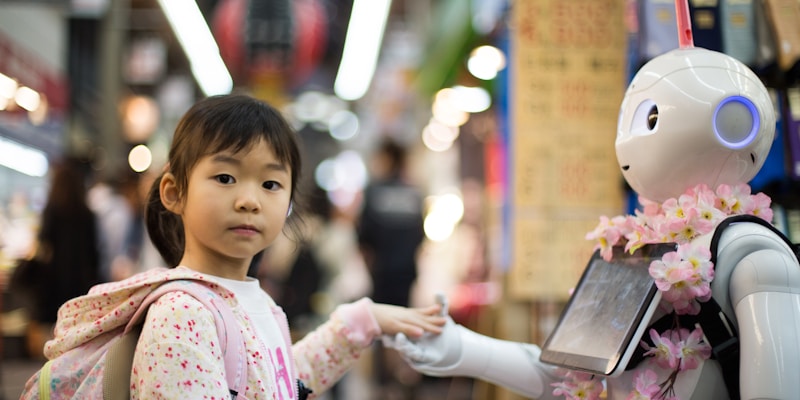
Figure AI’s Figure 02
Building on their partnership with OpenAI, Figure showcased enhanced capabilities:
- Full-body manipulation at human speed
- Natural language instruction following
- Warehouse and manufacturing applications
- 5-hour battery life with active use
Boston Dynamics Atlas (Electric)
The fully electric Atlas represents a shift from hydraulic systems:
- 360-degree joint rotation
- Lighter and more agile than hydraulic version
- Designed for automotive manufacturing
- Falls gracefully and self-recovers
Notable Others
- AMD + Generative Bionics GENE.01 - Lower-cost option targeting $8,000
- Intel + Oversonic RoBee - Focused on industrial inspection
- Samsung’s Robot Vacuum with Arms - Consumer-grade manipulation
Why This Matters for Developers
Physical AI creates entirely new development paradigms:
1. Simulation-First Development
// Development workflow for Physical AI
const robot = new PhysicalAIRobot({
  platform: 'cosmos-foundation',
  environment: 'omniverse-kitchen-sim'
});

// Train in simulation
await robot.train({
  task: 'pour_liquid',
  iterations: 100_000,
  physics: 'high_fidelity'
});

// Validate before real-world deployment
const metrics = await robot.validate({
  scenarios: ['various_cup_sizes', 'liquid_viscosities'],
  success_threshold: 0.95
});

// Deploy to physical hardware
if (metrics.success_rate > 0.95) {
  await robot.deployToHardware('kitchen-unit-001');
}
2. New API Paradigms
Physical AI requires new types of interfaces:
interface PhysicalAICapabilities {
  // Perception
  detectObjects(scene: Camera3D): DetectedObject[];
  estimatePose(object: DetectedObject): Pose6D;
  predictTrajectory(object: DetectedObject): Trajectory;

  // Planning
  planManipulation(task: ManipulationTask): ActionPlan;
  planNavigation(goal: Position3D): NavPath;
  planInteraction(human: HumanPresence): SafeInteraction;

  // Execution
  executeAction(action: Action): ActionResult;
  monitorExecution(plan: ActionPlan): ExecutionState;
  handleFailure(error: ExecutionError): RecoveryPlan;
}
3. Safety-Critical Considerations
Working with physical robots requires new safety patterns:
class SafetyController:
    def __init__(self, robot):
        self.robot = robot
        self.safety_zones = []
        self.human_tracker = HumanTracker()

    def execute_with_safety(self, action):
        # Check for humans in workspace
        humans = self.human_tracker.detect()
        if any(h.distance < SAFETY_THRESHOLD for h in humans):
            return self.slow_mode_execution(action)

        # Monitor forces during execution
        with self.force_monitoring():
            result = self.robot.execute(action)

        # Verify safe completion
        if not self.verify_safe_state():
            self.emergency_stop()

        return result
The Ecosystem Taking Shape
Development Platforms
| Platform | Focus | Availability |
|---|---|---|
| NVIDIA Isaac + Cosmos | Full stack | Now |
| Google DeepMind RT-X | Research | Limited |
| OpenAI + Figure | Humanoid | Partnership only |
| Meta Robotics | Open research | Open source |
Simulation Environments
- NVIDIA Omniverse - Industry standard for robotics sim
- MuJoCo - Open source physics (now Google-owned)
- Unity Robotics - Gaming engine adapted for robots
- Gazebo - ROS ecosystem standard
Hardware Targets
Compute Hierarchy for Physical AI
├── Edge (On-Robot)
│   ├── NVIDIA Jetson Orin (current)
│   ├── NVIDIA Thor (2027)
│   └── Perception + real-time control
│
├── Local Server
│   ├── NVIDIA DGX
│   ├── Complex planning
│   └── Multi-robot coordination
│
└── Cloud
    ├── Training
    ├── Model updates
    └── Fleet learning
Economic Impact
The numbers are staggering:
- $40B+ projected humanoid robot market by 2030
- 1.4M industrial robots deployed in 2025 (new record)
- 30% of warehouses expected to have humanoid workers by 2030
- $15K-$50K price range for mass-market humanoid robots
Industries being disrupted:
- Manufacturing - Assembly, quality inspection
- Logistics - Picking, packing, last-mile delivery
- Healthcare - Patient care, rehabilitation
- Agriculture - Harvesting, planting
- Retail - Stocking, customer service
- Home care - Elderly assistance, household tasks
Challenges Ahead
Technical
- Dexterity gap - Human hands have 27 degrees of freedom
- Battery life - Current humanoids last 1-5 hours
- Robustness - Real world is messy and unpredictable
- Cost - Still 10-100x too expensive for mass adoption
Regulatory
- Safety standards - No unified global framework yet
- Liability - Who’s responsible when robots cause harm?
- Privacy - Robots see and record everything
- Employment - Labor displacement concerns
Social
- Uncanny valley - Human-like robots can be unsettling
- Trust - Will people accept robot caregivers?
- Human connection - Risk of replacing human interaction
What’s Next: 2026-2030
2026: Warehouse and factory deployments scale up. First consumer robots ship (limited capabilities).
2027: Second-generation consumer robots with better manipulation. Healthcare applications expand.
2028: Price drops to $10K-15K for basic humanoids. Multi-robot coordination becomes standard.
2029: Home robots become practical for early adopters. Regulatory frameworks mature.
2030: Mass adoption begins. The first generation of “robot-native” children enters school.
Getting Started with Physical AI
For developers interested in this space:
1. Learn the Foundations
- ROS 2 - Robot Operating System (essential)
- PyTorch/JAX - ML frameworks used in robotics
- NVIDIA Isaac Sim - Simulation platform
- Control theory basics - PID, MPC, trajectory optimization
2. Start with Simulation
# Set up Isaac Sim
pip install isaacsim-app

# Clone starter project
git clone https://github.com/nvidia/cosmos-examples

# Run your first simulation
python examples/simple_manipulation.py
3. Join the Community
- ROS Discourse - robotics.stackexchange.com
- NVIDIA Developer Forums - Physical AI discussions
- r/robotics - Reddit community
- Physical AI Discord - Growing developer community
Resources
- TechCrunch: CES 2026 Everything Revealed
- Yahoo Finance: AI, Chips, and Robots at CES 2026
- TechRadar: 11 Biggest Tech Trends of 2026
Building robotics applications or exploring Physical AI integration? Contact CODERCOPS for consulting on simulation, deployment, and safety-critical development.
Sponsored
More from this category
More from AI Integration
 R.01
R.01 LLM Evals in Practice: Testing AI Features Before They Go Wrong
 R.02
R.02 Feature Flags for AI Features: Shipping Safely When Outputs Are Non-Deterministic
 R.03
R.03 LLM API Costs Are Out of Control: A Production Guide to Cutting Your Bill
Sponsored
The dispatch
Working notes from
the studio.
A short letter twice a month — what we shipped, what broke, and the AI tools earning their keep.
Discussion
Join the conversation.
Comments are powered by GitHub Discussions. Sign in with your GitHub account to leave a comment.
Sponsored